

Loading...

If you are looking to sync Salesforce records with Buildium using open API, this blog is just for you! We know Salesforce is a powerful CRM platform and Buildium, on the other hand, is popular property management software that streamlines property management tasks such as accounting, tenant communication, and maintenance requests. Integrating these two platforms can provide a comprehensive solution for property management companies And, by leveraging open API and LWC, you can seamlessly sync Salesforce records with Buildium, enabling you to update your property management information with ease. So, in this week’s blog, we are going to create an lwc button which will be placed on the account record page, and on clicking that button we will sync that record to the buildium property object. So, let’s start

Prerequisites

Please note that You will need a premium account in buildium because openApi is available only for the Premium account of buildium.

Step1:Setup buildium

a) Login into your buildium account

b) Go to settings then click application settings.
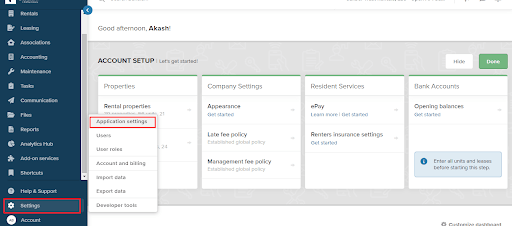
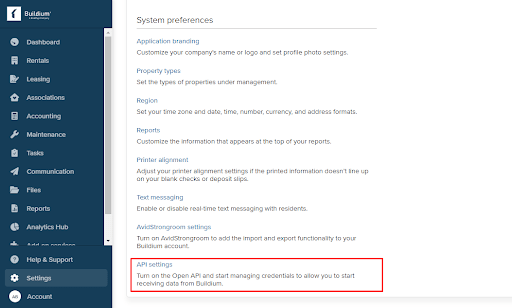
c) Scroll down to the System preferences tab and click on API settings.
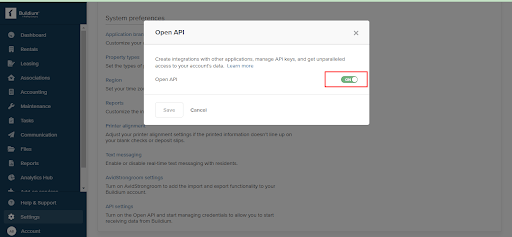
d) Toggle it on and click save.
e) Then again go to the home page and open settings and click on developer tools.
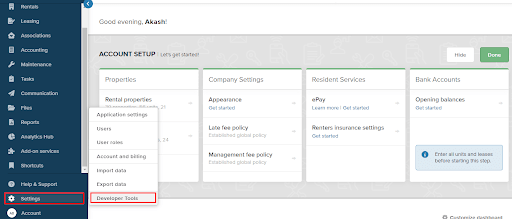
f) Click on create API keys. Give any name and click next to provide the level of access according to your need.
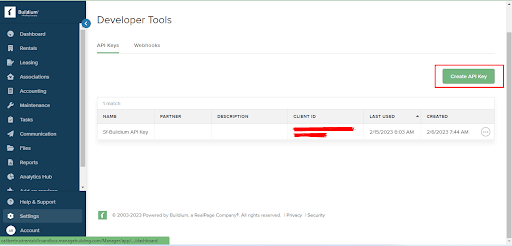
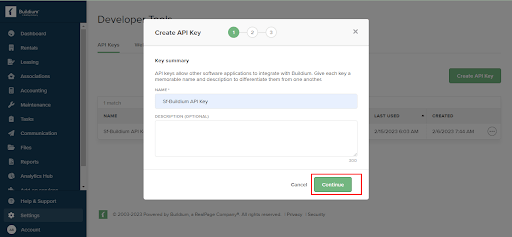
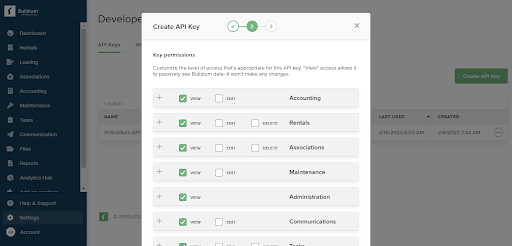
g) Now you will get the clientId and secret key. Store them somewhere for later use.

Step 2: Setup Salesforce

a) Go to remote site settings in salesforce and enter this

https://api.buildium.com

Step 3: Create lwc component

A. Html Code

B. JS Code

C. XML Code


Step 4: Apex class

While giving it a try, feel free to modify the code according to your need.

Conclusion

There you have it, an lwc button that will sync Salesforce records with Buildium. Check out the code for yourself to connect your Salesforce records with Buildium using open API.

Also, stay connected to our blogs for more such Salesforce development solutions. Catch you at the next one!


Related Articles

Sticky notes aren’t just for your desk anymore! In this tutorial, we’ll create a Lightning Web Component (LWC) in Salesforce that allows you to pin notes on your app page or record page. With a clean, interactive UI, these digital sticky notes ensure you never forget important tasks or details. What Will You Learn? By […]

Read More
How to Create Dynamic, Animated Charts in Salesforce LWC using Chart.js

Bring Salesforce data to life with dynamic charts inside Lightning pages! While Salesforce dashboards are powerful, sometimes business users want visual insights without leaving their current page. That’s where Chart.js with Lightning Web Components (LWC) becomes a game-changer. In this step-by-step guide, you’ll learn how to: Upload Chart.js as a static resource in Salesforce. Build […]

Read More
How to Encrypt and Decrypt Data in Salesforce Using Apex Crypto Class

Data security is more important than ever. Whether you’re storing customer information, sensitive business data, or private communication, ensuring that your data stays safe is critical. Salesforce provides built-in tools to help with this, and one of the most powerful yet easy-to-use approaches is encryption and decryption using the Apex Crypto class. In this blog, […]

Read More
Benefits & Step-by-Step Setup Guide for Salesforce Code Analyzer

When building on the Salesforce platform, code quality and security are non-negotiable, especially before submitting your app for a Salesforce Security Review. Catching bugs and vulnerabilities early not only saves time but also ensures compliance with Salesforce’s best practices. That’s where the Salesforce Code Analyzer comes in. This open-source tool scans your Apex classes, triggers, […]

Read More
A Step-by-Step Guide to Integrate Zoho CRM with Salesforce (Without Coding)

Managing data across multiple CRMs can be a real challenge for businesses that want a single source of truth. If your teams use Zoho CRM but want to move or sync all records seamlessly into Salesforce, you don’t need to write a single line of code. Thanks to MultiSync Made Easy, the integration process is […]

Read More
How to Integrate Salesforce with Copilot

Integrating Salesforce with Copilot is becoming an essential step for organizations aiming to streamline workflows, automate client data management, and unlock the power of AI-driven CRM. By connecting these two platforms, businesses can centralize customer information, reduce manual tasks, and accelerate growth. This guide walks you through the Salesforce–Copilot integration process with clear steps, Apex […]

Read More